Thursday, 12 April 2012

Fish Stop-Motion

Self Study
 
by Nicole Wilk

This is a 15 second stop-motion animation clip. I wanted to explore a continuous stop-motion project, which would have succeeded better had it not been a windy day knocking the porcelain fish off stones, this hindered the continuity aspect of the shooting. I do not have a clicker for photo-taking. In the birthday cake stop motion I learned that a clicker would have made things infinitely easier as it would free my hands and maintain even images throughout the shoot. Unfortunately, the wind also blew the tripod and affected accuracy again.

I started the shoot by projecting the locations of the cat and the 3 fish, then altered that perception by changing their locations during the movement of the piece. A part of this project goal was to incorporate the texture of stone and light as a reflection of the underwater ground, but at the same time to separate the cat of this reality with the grass background. I played with the angle of the camera and had my fish move in and out of the frame as well as to hint the location of the other fish by having them enter the frame.   


Colour Animation Study

Self-Study
by Nicole Wilk


Colour is a vast subject to study, so I narrowed down the goal of this project to incorporate the shifting and blending of colours. I wished to create a piece like this since I'd created a similar technique in opening to the video What I See. But more than that I've watched how mesmerized people are in the McMaster Mac Lab when the screen saver, an aurora of colours, come on the screen, and once I witnessed a student snap pictures of the screen saver with their cell. 

Taking this idea of merging colours further I photographed a journey on a bus. These images captured an array of colours over a 20 minute period of new locations. With these, I zoomed into the image to the max (600x) which amplified and isolated most colours from the image. This idea was conceptualized in a previous Vector project where we isolated a square of an image from a magazine and combined 5 of them to create an art piece.   

Once the images were blown out of proportion I added layering effects to merge the colours into themselves and then used photo's from the shoot to give the mind a focus point and maintain interest halfway through the production. This piece has no audio as I did not wish to distract the viewer or have the viewer time the shifting of colours to a beat.

A Study of Colour


Below are the original images. All these images are included in the video above, most 2-3 times from different sections of the photo.


From the view of a bus

Béatrice Coron: Stories cut from paper


Artist
 Thanks to Professor Franci Duran  who shared this artist with me.


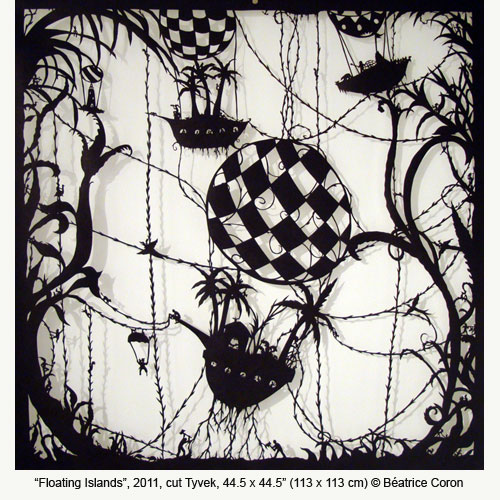
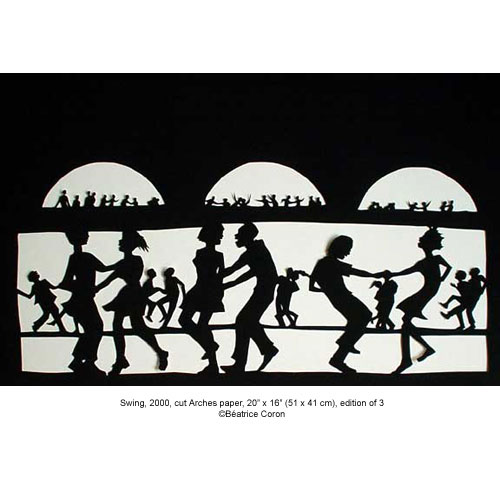
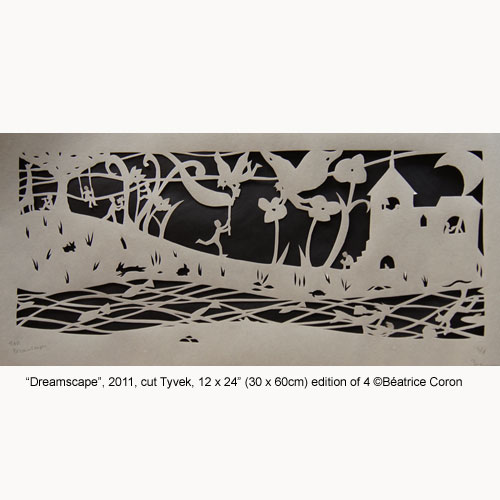
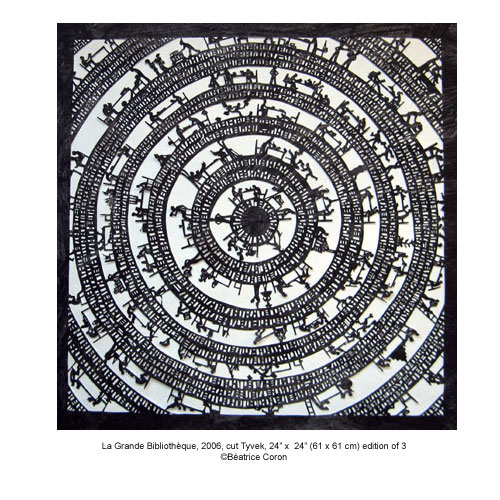
When I first watched this video about Béatrice Coron and her work of converting flat paper into stories with nothing more than the medium (paper) itself I was amazed at what one can accomplish. Paper is a tactile surface that has long been used to draw on, be coloured upon, and have things glued to - but what Coron does is use paper itself to create art. She uses negative and positive space to tell entire stories and create entire worlds with cutouts.  This begs the question, why did Coron decide to use paper as art, she said this:
"So, I chose paper-cutting because paper is cheap, it's light, and you can use it in many different ways."

Corin wasn't an artist, in fact it was only late in her life that she re-invented her identity. Well learned about the world and languages, Corin spent a fair chunk of her life in countries other than France and has taken up various odd jobs in her life. She's resided in China, Egypt, Mexico, and the States. It was in 1985 that she moved to New York and reinvented herself as an artist. 

 "And I chose the language of silhouette, because graphically it's very efficient, and it's also just getting to the essential of things"
 I share an affinity for Corin's love of silhouettes, and find that a great amount of detail can be attained in the outline of a shape. Silhouettes to me are a breakdown of how the mind can interpret design, and offer a more abstracted but often powerful image in its simplicity. I have just begun to work with silhouettes, but Corin has spent her artistic career working and assembking them, she has this to say:

My silhouettes are a language I have developed over the years. I create artist books for viewer to step in, or fine arts with illustration methods. I favor an expression that would involve all my creative instincts. With full and empty shapes, everything must fall in place: one’s place in the world. 

Corin is a  women who creates entire worlds with her silhouettes.


All art was taken from Corin's website which can be visted HERE.


Béatrice Coron's art is not static, nor is is entirely flat. Because her art maintained the same form as she grew as an artist, she expanded her art in the experience of it. Coron's work can be taken off the wall, it is not confined as many conventional art is, after all, a painting can only be experienced by having it angles right and a person standing a certain distance away. This is not the case in Corin's work. She moves her pieces from thhe hall, creates art that is meant to be stood behind, worn, and even experienced with wind. I find Corin to be a truly dynamic artist and one I will look to for inspiration myself.

Written by Nicole Wilk


The Joy of Books


Inspirational
Found this video by viewing it in class, thanks to Professor Franci Duran 
 
 
Written by Nicole Wilk


The Joy of Books is a beautiful one-and-a-half minute stop-motion video.  This video was shown during my year three animations class at McMaster campus and was recorded by a friend of my professor, Sean Ohlenkamp, who used a class of helpers to assist in the making of this multifaceted work.


The animation begins in an eerily Harry Potter feeling (magical) wide-shot of the scene-location. The music picks up speed as more and more books and motion occur within. From the outside, you see a normal bookstore, but once inside the store is alive. Books shift, move, organize themselves by colour, move around, and fleet over the floor. Extra buy items also come alive and provide a stable focus-point from the motion and color-calamity of the books.   


The sheer amount of work that has gone into this production (and in such a small space) is amazing. The mood is delightful, and creates a magical but eerie feeling whim from the books. I think this video is a beautiful example of what possibilities asking for permission to do animation can provide, as well as demonstrate the advantages of teamwork and co-operation.  


Information Provided by the Creators of The Bicycle Animation


After organizing our bookshelf almost a year ago (http://youtu.be/zhRT-PM7vpA), my wife and I (Sean Ohlenkamp) decided to take it to the next level. We spent many sleepless nights moving, stacking, and animating books at Type bookstore in Toronto (883 Queen Street West, (416) 366-8973).


Everything you see here can be purchased at Type Books.


Grayson Matthews (http://www.graysonmatthews.com/) generously composed the beautiful, custom music. You can download it here: http://itunes.apple.com/album/awakenings-single/id496796623


But none of it could have been done without all the volunteer hands who shelved and reshelved books all night, every night. A special thanks goes out to:


Lisa Blonder Ohlenkamp
Mike Takasaki
Hannah Charlick
Liz Walker
Andrew Carty
Filipe Da Luz
Ruth Ann Cachero
Justin Turco
Adam Tuck
Michael Groppo
Curtis Denomme
Shannon Farrell
Steffi Raike
Jean Marc Douville
Mikhail Ferrara
Clayton Vrenjak
Rob Sturch
Marie Rupolo
Nery Orellana
Mike Greco
William Chong
Terri Vegso
Michael Leishman
Emma Leishman
Mike Kolberg
Ryan Speziale
Natalie Mathers


So who wants to help us do the Library of Congress next? :)

The Bicycle Animation

Inspirational

Found this video by viewing it in class, thanks to Professor Franci Duran 
 Written by Nicole Wilk


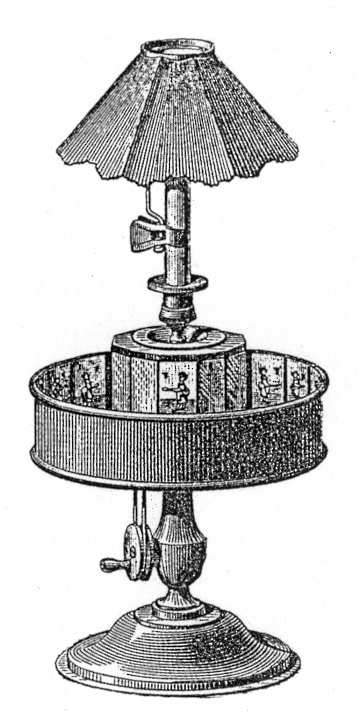
The students participating in this project took an old style of animation (check out a previous blog post here), and incorporated it into not just modern art but into a practical art demonstration of the secrets of motion. The animation technique I am referring to is an extension of the Zoetrope. The Zoetrope is a cylinder with long slits and sequence drawings on strips of paper that when spun appeared to be moving ( this was popular in the 19th Century in Europe & America). The Zoetrope inspired the Praxinoscope, which in turn inspired the Zoopraxiscope.

The
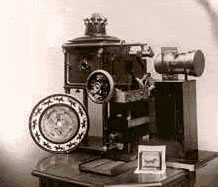
Zoopraxiscope was a projector device, designed by Eadward Muybridge, that used round discs with images printed around the disc rim that - when rotated - appeared to move.The design concept in The Bicycle Animation follows the same principle. By having the images (in this case laser-cut) rotate, the eye loses track of where to focus and the animation begins to blur into itself, but what happens with the rotation is that our eyes pick a point to focus on and as each piece if art hits that spot our eyes blur that to the one before, and the one before, tricking ourselves to believe the motion is still.

The bicycle animation uses the speed of the bike to get the smooth motion. The faster the person riding on the bike goes, the smoother our eyes can blend the animation. The wheels of the bike can change speed and duration, which makes the art "live art" in that it can change and grow in real time. I found this art facinating and wonder why it does not exist as bike deco's on the market already. For all the silly ways to customize bikes (like stickers), this art is beautuful and functional. A good material, even hard plastic, would be enough to create the art.

If this art was available for sale: I'd own two. 

One for each wheel!


If you liked this art, check out:
Béatrice Coron: Stories cut from paper


 Information Provided by the Creators of The Bicycle Animation

 If you would like to own a laser cut Bicycle Animation design please go to www.etsy.com/shop/katybeveridge1. These are not visible with the naked eye, it must be filmed to animate.

This is a piece created to question whether it was possible to film animation in realtime. Part of my CSM 3rd year disseration project I was looking at proto animation (really early basic animation) in contemporary design. I've taken a lot of influence from other contemporary designers who are using these techniques to explore the way we look at animation and how its made. As stated on my channel I have interviewed animators such as Jim le Fevre and in my research referenced other people using this technique such as David Wilson and Tim Wheatley who did this before me. I developed this project based on what is being done in animation right now as well as a lot of primary research into the history of animation techniques.

Big Thanks to my friend Stefan Neidermeyer who did the sound. The soundtrack is made up of various bike noies recorded during the filming process which Stef then remixed to make the amazing soundtrack.

Thanks to Henry Chung (http://henrichung.wordpress.com/) Fernando Laposse (http://www.fernandolaposse.com) and Dominic Roup and their great bikes for making an appearance.

Any Questions contact: katy_bev@hotmail.com


Wednesday, 11 April 2012

Peer Review of Tatterhood

Feedback
on Storyboard, Script, & Rough Cut


by Nicole Wilk

Our professor in Animation believes that we should be presenting our work to be reviewed by others. I've found this process to be helpful as my ideas are usually rounded off and receiving feedback on the project that would make it better or more understandable has been helpful. But more than that, by reviewing the class progress we witness the process of others in the class which I have found largely beneficial. I believe this helps us compare what level of work should be submitted, and to inspire other creative choices.


Feedback session in class about the storyboard and script


When Tatterhood the trailer was shown to the class there were many questions and comments. Praise for the artwork and mood, but also a consensus that our book trailer didn't feel like a book trailer. It was too theatrical. A change in the order of the trailer was needed with the introduction at the beginning, and a hint or direct statement of the story's origin as we centered the visual concept on the age of the story and the Nordic roots.


feedback in class after the rough draft

Monday, 9 April 2012

Eaudweard Muybridge


Animal Locomotion by Muybridge


In my third year Animation class at McMaster University we looked at the work of Eaudweard Muybridge. Muybridge, a photographer, was hired in 1872 by the governor of California to solve the question: Does a horse lift all 4 legs from the ground at a single point in time? In order to solve this bet Muybridge took a series of photographs. He discovered that the horse does lift all legs off the ground, however the horse pulled all legs in, at the time it was assumed the horse would be extending all limbs. As this was a great discovery, Muybridge continued the study of motion and has since helped many people understand the basics of motion by his frame-by-frame breakdown.  


The Horse in Motion


The McMaster Art Gallery had four Muybridge prints on display:
Volume 3, #92 Ascending Stairs, 1887
Volume 4, #222 Stooping, Lifting A Water Jar To Head And Turning, 1887
Volume 2, #391 Farmer Mowing Grass, 1887
Volume 5, #157 Jumping, Running Twist High Jump, 1887
All copyrighted in 1887 by Eadweard Maybridge. All Rights Reserved. 


We then visited the McMaster vault and to see the rest of the Muybridge collection, which included the unlabelled prints of 352, 388, 742, 611, 448, 435, & 27. The entire collection was both fascinating and educational. Muybridge's work was groundbreaking at the time, and was the only source of movement to be studied. Oddly, his work was considered scientific, not artistic, yet his work is highly regarded by animators for the fast collection of motion studies he has collected. I say his work is fascinating even in this day and age where we don't need stop-motion to create video's, and can record far more frames per second, because his work was the original. It created the standard. I am a firm believer of the basics and own my own Chinese book of menial tasks performed by nude males and females. My book, is likewise black and white photo's of people sitting, climbing ladders, walking, etc but from various angles.  The Chinese motion study book was found in Toronto's China Town, and was not intended for the West, yet the book performed similar studies of Muybridge despite the culture divide. 

Not surprisingly, since the study was performed in the 1800's, the photo content is sexist and racist. In print #222 a white female lifts a water jug to her head, #435 a white female is ironing clothes, and #448, two white females exchange flowers.  The females performed the tasks their bodies would most likely be doing in every-day tasks. The males, in contrast, were also all white and #157, jumping over high bars, #391 mowing grass, #27 carrying stones above his head, #352 carrying a rifle, and #388 farming. As the point of the study was to witness the every day mundane activities it is at once fitting activities but also furthering stereotypes. Do females often exchange flowers to warrant the breakdown of activity, or is that the image one wants to have when thinking of two girls? Could they have just as easily been reading together?

In the instance of the Plate's seen at McMaster Art Gallery there is a motion repeated by both genders, carrying something on the head (which would be rather silly in modern times now), and that is the girl carrying the water jug, and the man carrying the stone. Though the water jug is easily recognizable the stone was not, not even when I asked for the identity of the item from the Museum Informant. I do question if he was carrying a stone because men did at the time, or because it wouldn't have done to see him carrying a water jug. Regardless, it is not easy to compare the motion between these two similar gestures. The female is seen bending and lifting the jug which makes her task appear more difficult, whereas the male is walking casually with his stone.   


On the day that I wrote this blog post Muybridge was being honoured by Google. If you clicked play on the Google image the image started to slide horizontally gaining speed until the horse image successfully galloped.


,  Animated Google Doodle Honors Eadweard J. Muybridge


The following images are posted in an educational context to be studied and shared by University Students. All images are part of the McMaster University Art Gallery, and were shown on campus to McMaster media students to further their education. 


Plate 92 - Nude Female Ascending Stairs

Profile and rear views of nude female ascending stairs. 12 frame 1 1/2 stride climbing 2 steps.


Plate 92 - Nude Female Ascending Stairs
Duration of action: 100/100sec or 60f@60fps


Plate 92 - Nude Female Ascending Stairs
Flv is @ 30fps, QuickTime Mov is @ 59.94fps


Plate 157 - Semi Nude Male Underwear Jumping Running Twist High Jump

Profile and front views of semi nude male wearing underwear running, jumping a twist high jump. 12 frame jump.

Plate 157 - Semi Nude Male Underwear Jumping Running Twist High Jump
Duration of action: 152/100sec or 92f@60fps


Plate 222 - Nude Female Stooping Lifting Water Jar Head Turning

Profile and rear views of nude female stooping, lifting a water jar to head then turning. 12 frame single stride, stoop, raise, and turn.

Plate 222 - Nude Female Stooping Lifting Water Jar Head Turning
Duration of action: 273/100sec or 164f@60fps


Plate 391 - Nude Male Farmer Mowing Grass

Front and profile views of nude male farmer mowing grass. 12 frame torso twist.

Plate 391 - Nude Male Farmer Mowing Grass
Duration of action: 150/100sec or 90f@60fps


Plate 27 - Nude Male Looping Walkcycle Carrying 75lb Stone on Head Hands Raised

Profile, and rear view of nude male looping walkcycle carrying a 75 pound stone on his head with hands raised. 12 frame looping walkcycle.


Plate 27 - Nude Male Looping Walkcycle Carrying 75lb Stone on Head Hands Raised
Duration of action: 75/100sec or 45f@60fps


Plate 352 - Semi Nude Male Underwear Rifle Shoulder Order Carry Arms

Front, front three-quarter, and rear three-quarter views of semi nude male wearing underwear with rifle on shoulder, order carry arms. 11 frame arm movement.


Plate 352 - Semi Nude Male Underwear Rifle Shoulder Order Carry Arms
Duration of action: 300/100sec or 180f@60fps


Plate 388 - Nude Male Farmer Using Spade Loop

Profile, rear, and fron three-quater views of nude male farmer using a spade loop. 12 frame stoop and lift.


Plate 388 - Nude Male Farmer Using Spade Loop
Duration of action: 353/100sec or 212f@60fps


Plate 435 - Nude Female Ironing Clothes

Profile, rear, and front three-quarter views of nude female ironing clothes. 12 frame stoop, arm movement.
Plate 435 - Nude Female Ironing Clothes
Duration of action: 295/100sec or 177f@60fps


Plate 448 - Two Nude Female Descending Stairs Goblet Meeting Girl Bouquet

Profile and three-quarter views of two nude female, one descending the stairs with goblet, other girl with bouquet, meeting. 11 frame walk, carrying.

Plate 448 - Two Nude Female Descending Stairs Goblet Meeting Girl Bouquet
Duration of action: 229/100sec or 138f@60fps


Plate 611 - Horse Trotting Harnessed To Sulky Clothed Male Rider

Profile and rear views of horse trotting while harnessed to a sulky with a clothed male rider. 12 frame horse run.

Plate 611 - Horse Trotting Harnessed To Sulky Clothed Male Rider
Duration of action: 52/100sec or 32f@60fps


Plate 742 - Bactrain Camel - Racking and Galloping

Rear views of bactrain camel, a, racking, b, galloping. 12 frame quadped varying runs.

Plate 742 - Bactrain Camel - Racking and Galloping
Duration of action: 100/100sec or 60f@60fps